


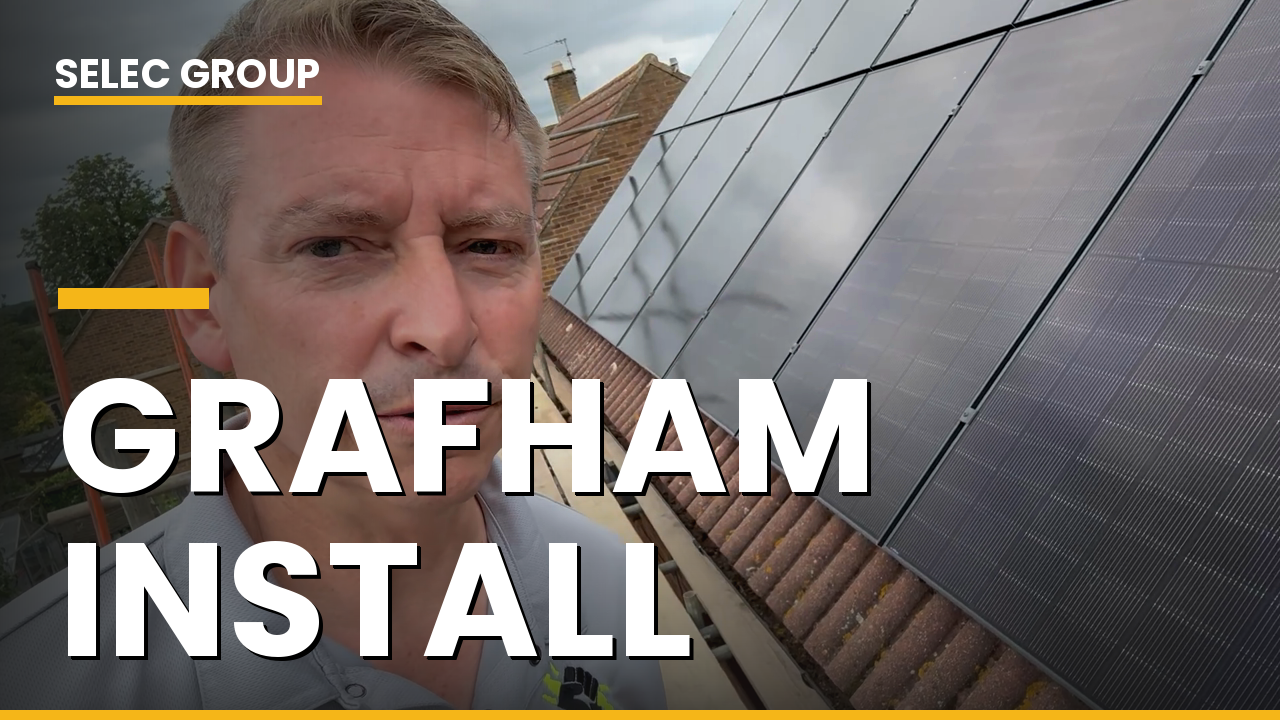
We have just about wrapped up a solar job in Grafham, a village right next to Grafham Water in Cambridgeshire. It is a 16 panel south facing system, and it is the sort of install we fit most weeks across this part of the county. In this post I will walk you through what a typical 16 panel system looks like, what “nearly finished” actually means on a job like this, and why having so many local installs around us matters more than you might think.

What a 16 panel south facing system looks like
Sixteen panels is a common size for a family home. With modern 465 watt panels that gives you a system of around 7.4 kilowatts peak, which is the headline rating of the array. In real terms a south facing array of this size in Cambridgeshire will produce roughly 7,000 kWh over a year, give or take, depending on shading and the pitch of the roof.
South facing is the ideal. If a panel could ever hit 100 percent efficiency, a south facing roof is where it would happen. The sun tracks across the southern sky, so the array catches light from morning through to evening. That steady production through the middle of the day is exactly when a south facing roof earns its keep.
This particular roof is a clean, fairly standard pitch with plenty of room, so all 16 panels sit in a tidy block. No awkward gaps around vents or dormers, which keeps the look clean and the output high.
What nearly finished means
When I say the job is “pretty much finished”, there are still two jobs left, and they matter.
- Bird proofing the bottom edge. We fit a black wire mesh skirt around the array to close off the gap between the panels and the tiles. Without it, pigeons get under there and nest. It is barely visible from the ground and it saves a real headache later. We fit it as standard.
- Connecting up at the bottom. The final electrical connection ties the array into the inverter and your consumer unit. Until that is done and tested, the panels are sitting on the roof doing nothing. They are not live.
That gap between “panels on the roof” and “system actually running” is worth understanding. Panels on tiles are not a working solar system. The wiring, the inverter, the isolation, the testing and the commissioning are what turn it into something that earns you money. We do not rush that part.
Why local density of installs matters
Here is the odd thing about this Grafham job. I stood on the roof and, for once, I could not see any of our other installations from up there. That almost never happens around here.
Normally when I am on a roof in this part of Cambridgeshire I can point out two or three of our systems on neighbouring streets. Part of the reason I could not this time is the season. It is summer, the trees are in full leaf, and the green is blocking the longer views. In winter, with bare branches, the picture is usually very different.
Why does that matter to you? A few reasons.
- It is honest proof of work. A cluster of local installs is a track record you can see with your own eyes, not a gallery of photos that could be from anywhere.
- We are genuinely local. We are not a national outfit parachuting a crew in from a cheaper part of the country. Our team is small, mostly employed, and based here. The only contractor on our sites is the scaffolder.
- We can come back. If anything ever needs attention, we are a short drive away. That is the whole point of using a company on your doorstep rather than one three counties over.
The kit and the standards
This system uses 465 watt panels, which is roughly where good quality modules sit at the moment. Old panels were around 275 watts. The newest ones are creeping towards 472 to 480 watts. You tend to pay a similar amount per panel over time but get a lot more power for it, which is why solar keeps making more sense.
We are MCS certified, and members of NAPIT, TrustMark and RECC. That accreditation is what lets you claim the Smart Export Guarantee, the scheme that pays you for the electricity you send back to the grid. It also means the install is signed off to a proper standard and notified correctly to your network operator.
What this house can expect
Once this system is live, what does a 16 panel south facing array actually do for the home? In rough terms, each 465 watt south facing panel here produces around 465 kWh over a year. Across all 16 panels that is a good chunk of the household’s annual electricity, generated on the roof for free.
In summer the array will make more than the house can use during the day. That surplus goes back to the grid and earns money under the Smart Export Guarantee, arriving as a credit on the account. Those summer credits then help cover the shorter winter days when production is lower. It is a pattern that suits this part of Cambridgeshire well, with bright summers and the array sized to take advantage of them.
The owners also have room to grow. If they move to electric heating with air conditioning down the line, this system is already big enough to feed it, so the house is set up for the future, not just for today.
The bottom line
A 16 panel south facing system like this Grafham job is a solid, well sized setup for a typical home, and it is exactly the kind of work we do day in, day out across Cambridgeshire. Once the bird proofing is in and the final connection is made and tested, this house will start generating its own electricity and earning export credits on the side. If you are in Grafham, Huntingdon, St Ives, St Neots or anywhere across Cambridgeshire, Bedfordshire and Northamptonshire and you want solar done properly by a local team, call the office on 01480 400 607 or request a survey through our website.
Jason Pope
Owner, Selec Group