


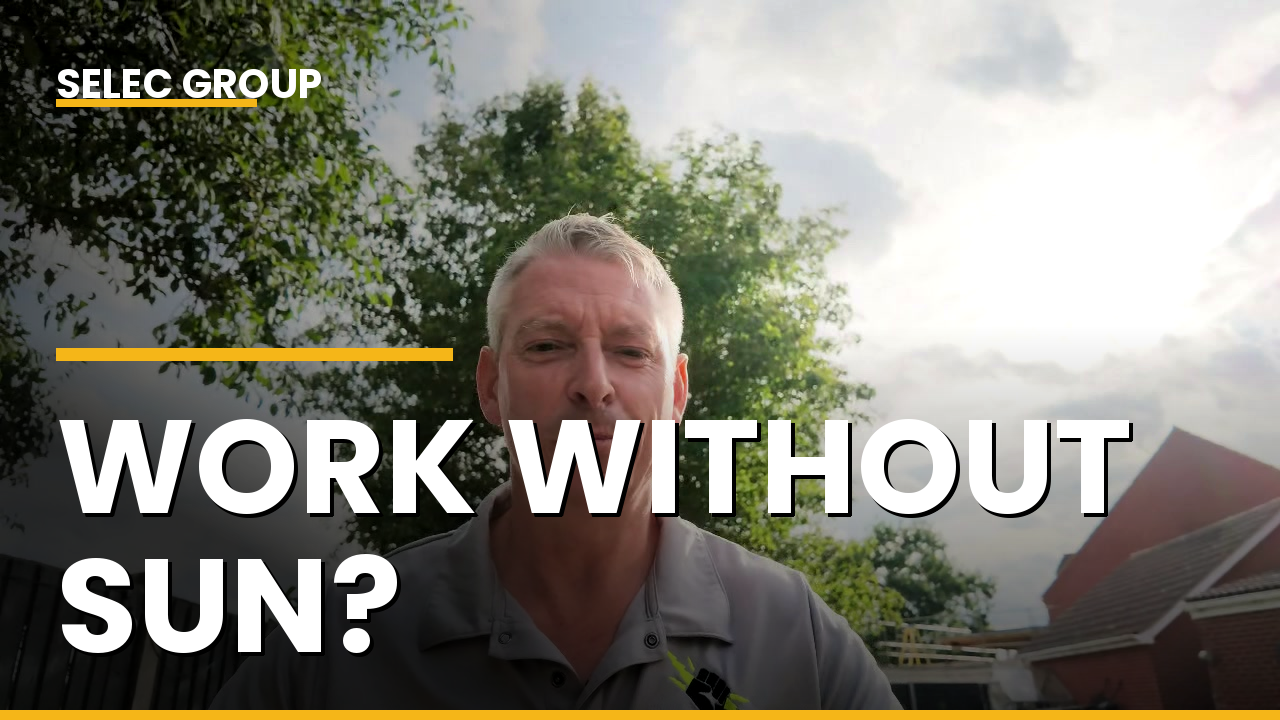
Do solar panels need direct sunlight to work? No. They need daylight. That is a different thing, and the difference matters a lot in a country like ours.
Rather than explain it, I filmed my own system on an afternoon when the sun kept going behind clouds and coming out again, so you can see the numbers move.
Light, not heat
A solar panel turns light into electricity. It does not care whether the light is direct sun or the diffuse glow you get through cloud. Direct sun is brighter, so you get more, but cloud does not switch the panel off. Heat is not part of it at all. In fact panels lose a little output when they get very hot, which is why a bright, cool spring day can beat a scorching one in July.
On a bright moonlit night I have seen a small amount of power coming off the panels. Not enough for the inverter to do anything with, but it was there. That tells you how little light a panel needs to start working.
What the numbers did
The reading on the day was late afternoon in September, so not the strongest part of the day. With the sun behind cloud the system was producing about 2 kW. As the sun came out it climbed to 3, then 3.3, then 3.8 kW. Earlier in the day in full sun this system peaks at about 6 kW.
So cloud roughly halved the output compared with clear sun at that time of day. Halved is not zero. 2 kW is still enough to run most of what a house uses in the afternoon.
What this means over a year
The UK does not get a lot of clear sunny days, and solar still works here because most of the year is bright cloud rather than darkness. Your system is designed around that. The panel count and the battery are sized on realistic local figures, not on a sunny day in Spain.
Where it does bite is winter. Short days and heavy cloud together mean a lot less output in December and January. That is why a battery, an export tariff that builds up credit over summer, and a cheap overnight tariff for charging matter. They fill the gap that cloud and short days leave.
What actually stops a panel working
- Shade. A tree, a chimney or a neighbour’s roof casting a hard shadow across the panel. This is far worse than cloud because it blocks the light completely from part of the panel.
- Darkness. Night, obviously.
- Snow lying on the panel. Rare here and it usually slides off a pitched roof quickly.
Cloud is not on that list. If you have been put off solar because the weather here is grey, look at the numbers in the video. Grey days are working days for a solar roof.
If you want a straight answer on your own house, we cover Cambridgeshire, Bedfordshire and Northamptonshire. We do a free survey and give you a clear written quote. Call 01480 400607 or read about our solar and battery installs.
Jason Pope
Owner, Selec Group