

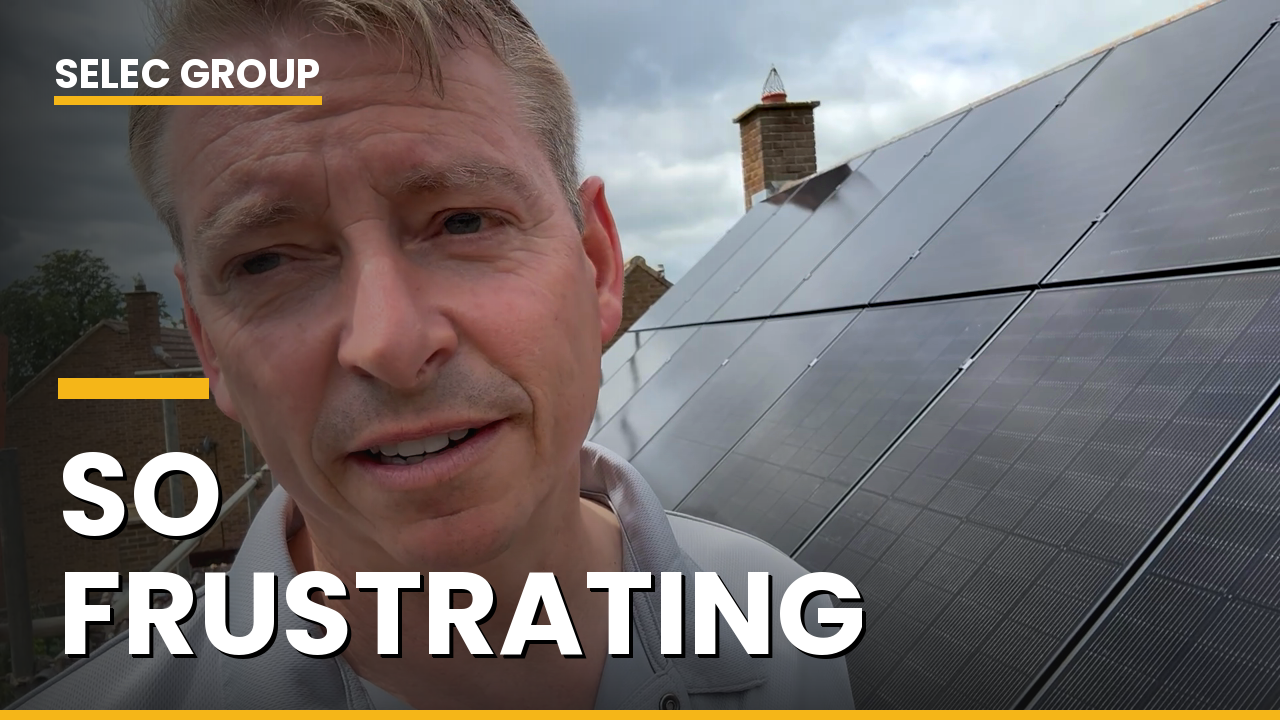
There is a moment near the end of every solar job that I find oddly hard to live with. The panels are on the roof. The sun is up. It is June, so there is plenty of light around. The cables run neatly down to the garage where the inverter sits. Everything is in place to produce a good amount of electricity, and it is not switched on yet.
In my head I picture all those electrons spilling out of the ends of the wires, going to waste. They do not actually fall out of the wires, of course. But that is how it feels to me. I am sad like that.
So in this post I will walk you through what happens in those final hours, after the panels are up but before the system goes live. It is the part homeowners ask about most, because from the outside it looks finished. There is good reason for the wait, and it is all about doing the job properly.

Why the panels are not switched on the moment they are fitted
Fitting the panels is only one part of the work. A solar array on the roof does nothing on its own. It needs the inverter wired in, the system tested, and the paperwork in place before it can safely feed your home and the grid.
Switching on too early, before testing, is how you get problems later. We would rather take the extra time on the day and hand you a system that works correctly from the first minute.
The inverter is the heart of it
Your panels produce direct current, known as DC. Your home runs on alternating current, known as AC. The inverter is the box that converts one into the other. It usually lives in a garage, loft or utility area, somewhere cool and accessible.
Before we energise anything we:
- Mount the inverter securely and connect the DC cables coming down from the roof.
- Wire the inverter into your consumer unit, which is your fuse board, through its own protected circuit.
- Connect the battery if you are having one, since batteries and inverters often come as a single matched system.
- Fit any metering and monitoring kit so you can see what the system is doing on your phone.
Only once all of that is sound do we move on to testing.
Testing before we let it produce a watt
Electrical testing is the part you do not see, and it is the part that matters most. We check the DC side and the AC side separately. We confirm the panels are wired in the right polarity, that the strings are reading the voltages we expect, and that every connection is tight and correct.
We test the earthing and the protective devices. We check the isolators work, so the system can be shut down safely in an emergency. If anything reads wrong, we find it now, on the ground, with the scaffold still up, rather than weeks later.
This testing also feeds into your paperwork, which you keep. A proper install comes with electrical certificates and an MCS certificate. MCS stands for the Microgeneration Certification Scheme, the standard that quality solar work is held to in the UK.
The DNO notification, and why it can mean a short wait
DNO stands for Distribution Network Operator. That is the company that owns the local electricity network, the cables and substations in your area. It is not your energy supplier, it is the network itself.
Before solar can export power back to the grid, the DNO has to know about it. There are two routes:
- For most domestic systems up to a certain size we use G98, which lets us connect first and notify the DNO afterwards. This means there is no wait to switch on.
- For larger systems, or where the local network is already busy, we need G99 approval, which has to be granted before the system goes live. That can take a few weeks.
We sort this out for you. If your system needs prior approval, we will have told you well before install day, so there are no surprises. Most homes fall under the simpler route and go live the same day.
Commissioning and switching on
Commissioning is the official term for bringing the system to life and proving it works. With testing passed and the paperwork in order, we energise the inverter, watch it start up, and check it is talking to the panels and to the grid correctly.
We set up the monitoring so you can watch your generation in real time. If you have a battery, we set its charge and discharge behaviour to suit how you use electricity. This is also where we make sure you are set up to benefit from the Smart Export Guarantee, the scheme that pays you for the surplus you send back to the grid.
Then, finally, the system starts producing. Those electrons stop going to waste, and I am a much happier man.
Handover, so you know how to use it
A system is only as good as your understanding of it. Before we leave we walk you through:
- How to read your app and check daily generation.
- How to shut the system down safely if you ever need to.
- What your certificates and warranty documents cover, and where to keep them.
- How to get the best from a battery, including cheap overnight charging where your tariff allows it. My own overnight rate is about 7 pence a unit against roughly 30 pence in the day, so there is real money in using it well.
You also get our number. If anything ever looks off, you call the office and speak to a person.
The bottom line
The gap between panels going up and the system switching on is short, but it is the part that protects your investment. Testing, the DNO notification, commissioning and a proper handover are what separate a job done properly from one rushed to look finished.
We install solar and battery systems across Cambridgeshire, Bedfordshire and Northamptonshire, around Huntingdon, St Ives, St Neots, Buckden and the surrounding villages. If you want it done right the first time, call the office on 01480 400 607 or request a survey through our website.
Jason Pope
Owner, Selec Group