


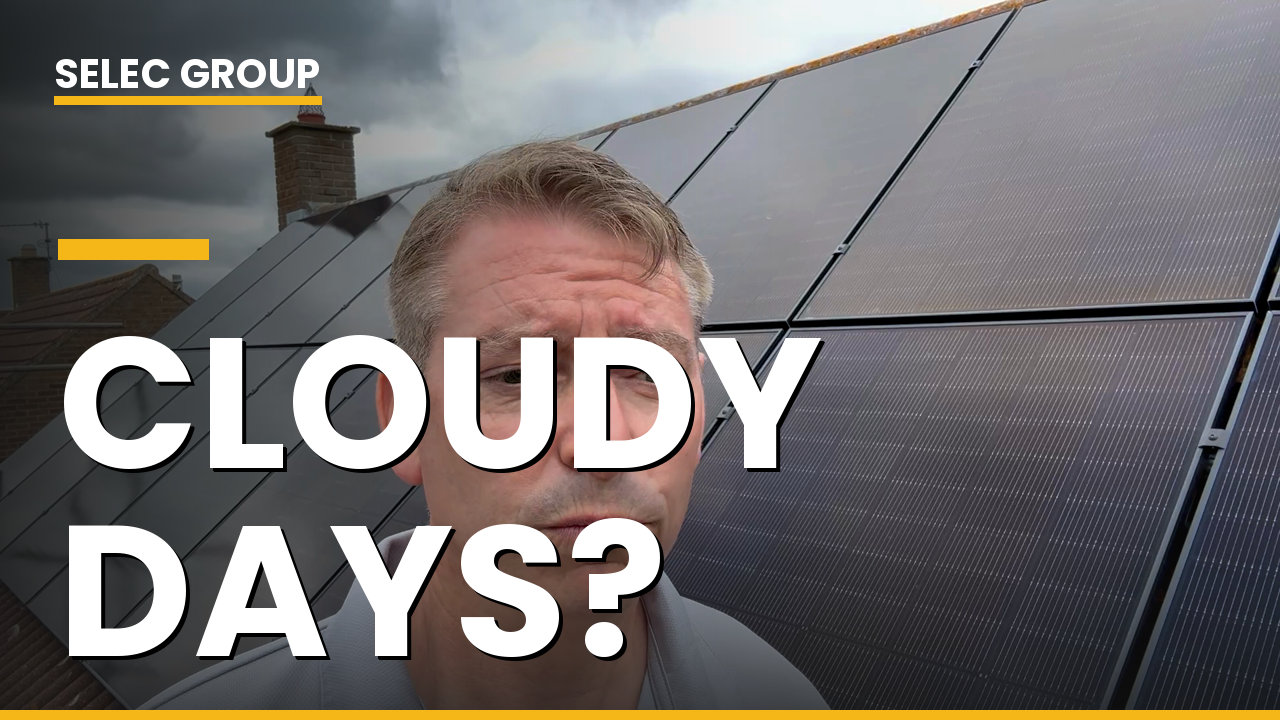
Yes, they do. This is one of the most common worries I hear, usually some version of “but we live in Britain, it is grey half the year”. It is a fair question and the answer is reassuring. Solar panels run on daylight, not direct sunshine, so a cloudy day is still a productive day. Let me walk you through how that works, what changes between summer and winter, and how a well sized system can leave you with no electricity bill at all.
Light, not direct sunshine
The key thing to understand is what the panels actually respond to. They work on light, not on the sun being out in a clear blue sky. As long as it is bright, they are generating.
Take the 16 panel system I was looking at when I filmed this. It is 16 panels of 465 watts. The day was overcast but bright, a normal June day in Cambridgeshire. If that system had been plugged in, which it was not quite at that point, it would have been producing a decent amount despite the cloud. The light getting through the cloud is still plenty for the panels to do their job.
So no, you do not need a heatwave for solar to pay its way. A bright, cloudy day in this country produces real, useful electricity.
Summer versus winter
The honest answer to “what about winter” is that you do still generate, just less. The panels themselves work fine in the cold. In fact panels are slightly more efficient at lower temperatures. The thing that changes is daylight hours.
- Summer: long days, lots of light, big daily totals. The array often produces more than the house can use.
- Winter: short days, so even with decent light while it is up, you have fewer hours to collect it. Daily totals are lower.
It is the length of the day, not the cloud, that mainly drives the seasonal difference. You still get a sensible amount out of the panels through winter. You just get it over fewer hours.
Why we oversize the array
This is where good design pays off, and it is tied directly to the summer and winter pattern.
We deliberately fit a nice large array, big enough to produce more than the house can use during the summer. That sounds wasteful at first, but it is the opposite. Here is the logic.
In summer the surplus you cannot use does not go to waste. It goes back to the grid, and you get paid for it. Under the Smart Export Guarantee, or SEG, your energy supplier pays you for every unit you export. That arrives as a credit on your account.
Those summer credits then offset your winter costs. You build up a buffer when the sun is generous and draw on it when the days are short. Sizing the system to overproduce in summer is how you carry value across into the lean months.
The shift to electric heating
The house in this video is on gas heating for now, but the plan, as with a lot of our customers, is to move to electric heating in time. We do that with air conditioning systems, which are air to air heat pumps. They are a very efficient way to heat a home with electricity.
Once that switch happens, the picture gets even better:
- In summer the home uses some of the solar it generates and exports the rest for SEG credits.
- In winter the heating runs on electricity, but those built up summer credits go towards the cost.
- Across the whole year, the maths very often nets out to a zero electricity bill.
That is the goal we design towards. A home that makes its own power in summer, banks the surplus, and uses it to cover the heating and lighting it draws in winter.
What a zero bill really means
I want to be clear about this, because it is a strong claim. A zero bill overall does not mean the meter never moves. It means that across the year, what you export and bank in credit cancels out what you import. The good months pay for the lean months.
It depends on sizing the system correctly, using a fair export tariff, and on how you use your heating. But for the right home, with a properly sized array, it is a realistic outcome rather than a sales line. Plenty of our customers run at or near zero across the year.
Getting more from your own power
Cloudy day generation is even more valuable when you store it. A battery lets you hold the electricity your panels make and use it later, instead of exporting it cheaply and buying it back expensively after dark.
The numbers make the case. My own overnight electricity rate is about 7 pence per unit and my day rate is about 30 pence. Every unit your panels make and you use yourself, rather than buying from the grid, saves you the day rate. A battery widens that out across the evening and into the night, so a bright cloudy day in summer can keep the lights and appliances running long after the sun has gone.
You do not need a battery for solar to be worthwhile, but it changes how much of your own generation you keep. On the changeable, cloudy days this country is known for, storing what you make rather than letting it slip to the grid is where a lot of the value sits.
The bottom line
Cloud is not the enemy people think it is. Solar panels run on daylight, so a bright overcast day still produces well, and even short winter days give you usable electricity. Size the array to overproduce in summer, bank the surplus as SEG credits, and you can offset your winter costs and often land at a zero bill overall, especially once you move to efficient electric heating. We design and fit systems with all of this in mind across Cambridgeshire, Bedfordshire and Northamptonshire. If you want to know what your roof could do, call the office on 01480 400607 or request a survey through our website.
Jason Pope
Owner, Selec Group