


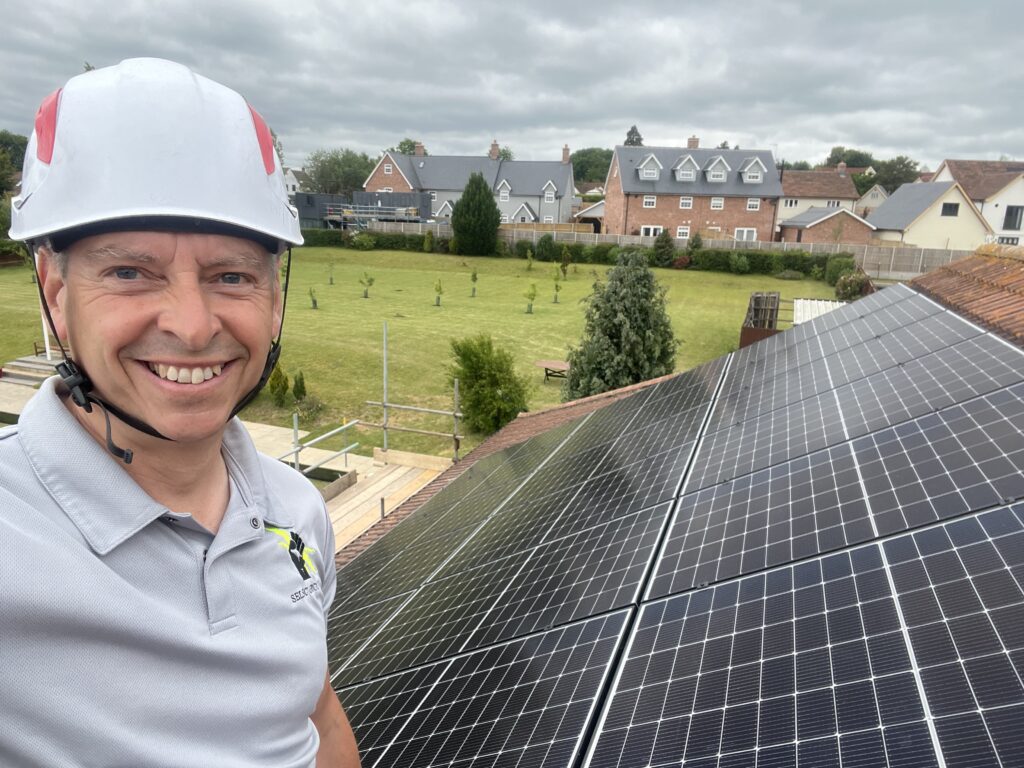
I am Jason Pope from Selec Group, solar panel installers based in Cambridgeshire. People often ask me how solar panels actually work, so here is the plain English version. No physics lecture, just what happens between daylight landing on your roof and the kettle boiling for free.
Daylight in, electricity out
A solar panel is made up of cells that generate electricity when daylight lands on them. The important word is daylight, not sunshine. Panels produce their best output on a clear day, but they still generate under cloud, just less of it. They work on light rather than heat, which is why a bright, cold spring day can outperform a muggy August afternoon.
The electricity the panels make is DC, direct current. Your home runs on AC, alternating current, so the power needs converting before you can use it.
The inverter is the brain
That converting is the inverter’s job. It sits between the panels and your consumer unit and turns DC into AC. It also decides, second by second, where the power should go. A good quality inverter matters as much as good panels, which is why we specify both carefully on every system we design.
Where the power goes
Once the inverter has made usable electricity, there is an order of priority. First it powers whatever your house is using at that moment. If there is spare and you have a battery, it charges the battery. Anything left after that is exported to the grid, and through the Smart Export Guarantee you are paid for every unit you send out.
That is also why a battery makes such a difference. Instead of selling your spare power cheaply in the afternoon and buying it back dearly in the evening, you store it and use it yourself.
Does your roof direction matter?
In the UK, a south facing roof generates the most over a year. East and west facing roofs are perfectly viable, they simply spread their generation across the morning and afternoon, which suits many households well. A north facing roof is the weakest option and usually only worth panels in specific circumstances. Whatever you have, we assess orientation, pitch and shading properly at the survey before recommending anything.
Winter, summer and cloudy days
Generation follows the seasons. Long summer days produce far more than short winter ones, and your yearly savings rely on that summer surplus. In winter, a battery paired with a cheap overnight tariff keeps costs down: the battery charges at the low rate overnight and runs the house through the day, with the panels topping it up whenever there is light.
The bottom line
Panels make DC from daylight, the inverter turns it into AC, your home uses it first, the battery stores the spare, and the grid pays you for the rest. Done properly, with the right design for your roof and your usage, it is a system that quietly gets on with cutting your bills for decades.
We design and install solar and battery systems across Cambridgeshire, Bedfordshire and Northamptonshire, including Huntingdon, St Neots, Brampton, Buckden and the villages in between. If you would like to know what your roof could do, call the office on 01480 400 607 or request a survey through our website.
Jason Pope, Owner, Selec Group